
Researchers manipulate helical supramolecular structures, key for applications from photovoltaics to understanding alzheimer
The Madrid Institute of Materials Science (ICMM-CSIC), a entity under the Spanish National Research Council, together with IMDEA NanoScience, leads a study that has managed to control the steps by which supramolecular structures in the form of helices are formed (assembled) and to isolate them. Thanks to this, they have been able to manipulate these structures 'to order', creating up to four independent systems from a single molecule.
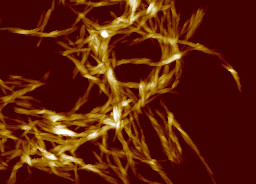
The work, published in the journal Nature Communications, has implications in fields ranging from the photovoltaic industry to pharmaceuticals, and in fact also serves to understand how Alzheimer's evolves within the human brain, since the 'assembly' procedure is similar.
"One and the same molecule, depending on how you process it, can form different types of supramolecular structures," explains Amparo Ruiz Carretero, ATRAE researcher at the Institute of Materials Science of Madrid (ICMM-CSIC) and leader of the study. This scientist points out that this occurs in any type of molecule, but that the complexity is greater when this molecule is chiral: those with structures similar to helices. "They are mirror images that cannot be superimposed because they have no plane of symmetry; this is what happens with DNA," she continues.
In this context, "understanding how molecular chirality propagates to generate hierarchical structures remains a central challenge in supramolecular chemistry," adds Thomas M. Hermans, ATRAE researcher at IMDEA Nanociencia and also leader of the study.
"The most important thing about this type of structure is that they normally cannot be isolated," indicates Ruiz Carretero. "They are ephemeral; you perceive them through spectroscopy – the study of the interaction of light and matter – and the spectrum tells you they are there, but you cannot see them, let alone manipulate or use them."
Calorimetry study and manipulation of the structures
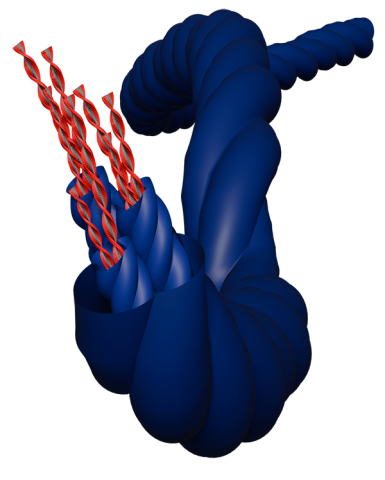
Thanks to a complex experimental technique based on heat, which had hardly been used before – so-called Isothermal Titration Calorimetry (ITC) – they have managed to determine the formation energy of each structure, which constitutes an experimental milestone. "Normally, the assembly energy is calculated using simplified mathematical models that start from various assumptions. Now, we know the values for certain," Ruiz Carretero clarifies.
Furthermore, they have not only been able to isolate the molecular structures but also manipulate them at will. "We have discovered that they are interconvertible among themselves: you can take a small piece of one structure and transfer it to another, and this technique also helps us see what type of assembly mechanism we are passing from one to another," Hermans describes.
Ruiz Carretero continues the explanation: "we have four supramolecular structures and we select the one that works best for our goal, but we also add 'bits' from another to add effects that interest us."
The team argues that their study can be applied in very diverse fields. In fact, they also relate it to amyloids in Alzheimer's. Amyloids are proteins that misfold and form insoluble fibres that accumulate in tissues and organs: "some of their fibres form helices and others, superhelices through a process called secondary nucleation." The same happens with the molecules they have worked with in this study.
Now, each team will continue to make progress in complementary directions within chiral supramolecular chemistry: "We have created different design strategies," they explain. Thus, Amparo Ruiz Carretero will continue her ATRAE project aimed at "shedding light on how chirality can drive the advancement of organic photovoltaics," while Thomas M. Hermans will advance in supramolecular robotics.
"In this study we have worked with semiconductors, but the results can be applied to spintronics, pharmaceuticals, photovoltaics, thermoelectricity…," the researchers list. "Once you have isolated the structure, you can manipulate and study it in any medium," they celebrate, while also advancing that they have already developed some of these samples.
"These results offer an exceptional, experimentally resolved example of how the mere selection of the structure formation pathway can program chirality, hierarchy, and morphology in supramolecular materials," the team concludes.
The work has been made possible thanks to funding from the Ministry of Science, Innovation and Universities, through the ATRAE programme, and includes the participation of the French CNRS, the Autonomous University of Madrid, and the Regional Institute for Applied Scientific Research (IRICA) of the University of Castilla-La Mancha.
Referencia científica:
Kyeong-Im Hong, Jorge S. Valera, Ana M. Garcia, Thomas M. Hermans* and Amparo Ruiz-Carretero*. From helices to superhelices through hierarchical assembly across competing pathways. Nature Communications. DOI: 10.1038/s41467-026-76656-4
ICMM Comunicación - @email
Instituto de Ciencia de Materiales de Madrid (ICMM)
Sor Juana Ines de la Cruz, 3
Cantoblanco, 28049
Madrid, España
Telephone: (+34) 91 334 90 00
Email: @email
Communication Office: @email

Acknowledge the Severo Ochoa Centres of Excellence program through Grant CEX2024-001445-S/ financiado por MICIU/AEI / 10.13039/501100011033

Contacto | Accesibilidad | Aviso legal | Política de Cookies | Protección de datos